Ensuring Renters Benefit from Energy Efficiency
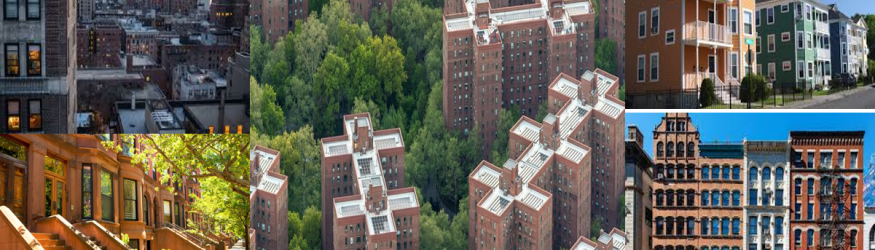
In the Northeast and Mid-Atlantic, multifamily buildings with five or more units account for up to 39 percent of total housing, more than 10 percent above the national average, and provide homes to millions of residents. This scale and density make the sector a critical component of regional, state, and local strategies for energy efficiency, energy affordability, healthy housing, and greenhouse gas emissions reductions. Large and mid-size multifamily buildings are common in the Northeast, with 32 percent of rental units located in buildings with at least 20 apartments. Given this market share, the multifamily sector presents a major opportunity to improve building performance while preserving affordable housing and enhancing residents’ quality of life.
The Challenge of Scale and Age
The scale and age of the region’s multifamily housing stock complicate efforts to improve energy efficiency. Nationally, around 55 percent of small and medium multifamily properties were built before 1980. In cities like Philadelphia, where multifamily buildings constitute 42 percent of the rental market, the share of single- and multi-family residential units constructed before 1980 is as high as 88 percent. Upgrades in older buildings are complicated by hazards like mold and asbestos, outdated electrical systems, and costly structural repairs. These conditions contribute to high energy burdens and persistent health and safety risks for residents.
Centering Equity
These challenges disproportionately impact low- to moderate-income communities, who are more likely to live in older buildings. Without safeguards, retrofitting these buildings can increase the risk of post-upgrade displacement through rent increases and property sales. As a result, well-intentioned rehabilitation projects can threaten the availability of affordable housing for vulnerable populations including older adults, persons with disabilities, working-class households, and immigrant and new American communities that rely on low-barrier affordable rental housing.
NEEP’s Strategic Response
NEEP’s multifamily initiative aligns energy affordability, housing stability, public health, and climate action into a single, coordinated strategy. To advance this strategy, NEEP convenes and supports key stakeholders, including state energy offices, local governments, utilities, housing providers, community development agencies, and more to advance practical, scalable solutions.
The initiative focuses on four core areas:
- Mapping and facilitating access to financing streams for energy efficiency upgrades
- Research and resources to inform policy and program design
- Promoting proven retrofit models and best practices for program implementation
- Project management and technical assistance to scale effective program models
NEEP Multifamily Resources
To support practitioners in the region, NEEP develops resources that inform program design and implementation strategies and approaches to program delivery. These tools can help stakeholders as they seek to improve energy efficiency in multifamily properties in ways that reflect real-world building conditions and the specific needs of multifamily building owners and residents.
Multifamily Blog Posts
- Equitable Decarbonization in the Affordable Multifamily Sector
- The Problem in Multifamily Energy Data Access
- Decarbonizing Multifamily Affordable Housing with Networked Geothermal in Connecticut
- LIHTC Expansion: An Opportunity for Energy Efficiency in Affordable Housing
Multifamily Cold Climate Retrofit Case Study Database
The Multifamily Cold Climate Retrofit Case Study Database is a sortable catalog of energy efficiency retrofit projects in multifamily buildings in the Northeast and Mid-Atlantic regions. This tool can help program administrators, architects, contractors, housing developers, state and local governments, community stakeholders, and others identify actionable, real-world strategies for multifamily energy efficiency retrofits. The Database also highlights opportunities for further research, particularly regarding post-intervention performance data.

Case Study Database Overview
Selected case studies are primarily sourced from the 12 states that comprise the Northeast and Mid-Atlantic regions, plus Washington D.C. with a few examples from similar climate zones in other US states and Canadian provinces. To ensure technical relevance, only studies published after 2019 are included. Featured projects all involve energy efficiency improvements or building electrification, with many projects being deep energy retrofits.
The Database contains over 50 case studies spanning a wide variety of building vintages, sizes, and ownership models. Featured properties range from historic walk‑ups to mid‑century towers and newer post‑2000 buildings and vary in size from four‑story residential conversions to campus-style complexes with more than 300 units. Ownership profiles include public housing authorities, mission-driven nonprofits, limited‑equity co‑ops, and conventional market rate and mixed‑income developments, illustrating how similar retrofit strategies are being adapted across ownership and financing contexts.
Featured metrics include key details from each case study including date and author, a summary of the building’s physical characteristics, property income restrictions (if any), project financing details, a comparison of pre- and post-retrofit building systems, and modeled and reported project outcomes including reductions in heating fuel and electricity use, as well as overall Energy Use Intensity reductions.
Key Insights
- Many projects braid multiple capital sources including utility incentives, green bank or C‑PACE loans, state grants, Low-income Housing Tax Credits, and owner equity to cover up to 40 percent of project costs.
- Pre-retrofit buildings often feature older, inefficient natural gas or fuel oil boilers, window unit air conditioners or aging chillers, poor insulation, and inefficient lighting. Retrofit projects frequently pair heat pumps or high-efficiency boilers with upgraded envelopes, modern ventilation, and efficient lighting. This demonstrates that multifamily properties are moving from old, fossil-fuel systems and leaky envelopes to highly efficient, often electrified systems with much tighter exterior shells.
- A significant number of projects in the Database are at properties serving low- and moderate-income residents, highlighting the role of affordable housing as central to innovation in multifamily energy efficiency.
- Specific measures employed at featured properties vary by building vintage, building system type, and ownership structure, underscoring the need for tailored retrofit strategies.
References
Building Energy Exchange. Hi-Rise Low-Carbon Multifamily report and associated case studies (e.g., 172 E 4th St; Roosevelt Landings; Rivermark Apartments; Putnam Square). https://be-exchange.org/report/hi-rise-low-carbon-multifamily LISC &
LISC/RMI. Green Retrofit Initiative and deep energy retrofit case studies (e.g., Hano Homes; Eva White Apartments; Powdermill Village; Nonantum Village Apartments; Aspen Street Cooperative). https://www.lisc.org/our-initiatives/housing/green-retrofit/
NYSERDA. Multifamily decarbonization and retrofit case studies (e.g., Annal Management portfolio; Amalgamated Housing “The Towers”; Carnegie House; Engine 16 Building; Marcus Garvey Apartments; Casa Pasiva / RiseBoro Community Partnership). https://www.nyserda.ny.gov/Residents-and-Homeowners/Case-Studies
New Ecology. Affordable multifamily retrofit case studies (e.g., 808–812 Memorial Drive; Bellevue–Manchester Apartments; Powdermill Village; Nonantum Village Apartments; Hano Homes; Margaret–Bennett Homes; Scrivano Apartments; Carrington Way; Fairweather Apartments; Eva White Apartments). https://www.newecology.org/case-studies-list
Green Bank/PACE Programs. Project case studies (e.g., Montgomery County Green Bank and MD Green Bank projects: 8101 Connecticut Ave; Glen Manor Condos; Hampshire Tower Apartments; Kenwood House Co‑op; Aspen Street Cooperative; Browns Arcade; “Maximum Incentives for Maximum Savings” boiler replacements). https://mcgreenbank.org/case-studies/
Other regional exemplars: CHP Energy Solutions – Princeton Village Apartments; Stone Mill Lofts adaptive reuse; additional mixed‑income and market‑rate multifamily retrofits using C‑PACE, CHP, and deep energy retrofit approaches. https://www.communityhousingpartners.org/princeton-village-case-study-1/; https://retrofithomemagazine.com/2025/01/at-stone-mill-lofts-the-past-present-and-future-of-adaptive-reuse-meet-in-unexpected-ways; https://online.ucpress.edu/cse/article-abstract/8/1/2253451/200753/Decarbonizing-Affordable-Housing-in-New-York