
By Maggie Molina | Thu, February 12, 26
Allies Webinar Presentation, by Maggie Molina February 5, 2026
Energy Affordability, Load Growth,
and the Case for Doubling Down on Energy Efficiency
If you asked state energy officials at NASEO what themes are dominating the conversation this year, the answers would come quickly: energy affordability and large load growth. These issues are surfacing everywhere — in state energy offices, in conversations with consumers and businesses, and in governors’ priorities. Affordability, in particular, is driving urgent action.
Across the country, states are rolling out new proposals aimed at easing energy burdens. Just in the past month, five states have introduced plans or legislation focused squarely on affordability — each taking a different approach, but all seeking tools that deliver immediate relief. Unfortunately, some of these proposed short-term efforts would come at the expense of the long-term benefits of energy efficiency. We urge caution with such proposals. Now is the time to double down on energy efficiency, not cut its critical benefits to customers.
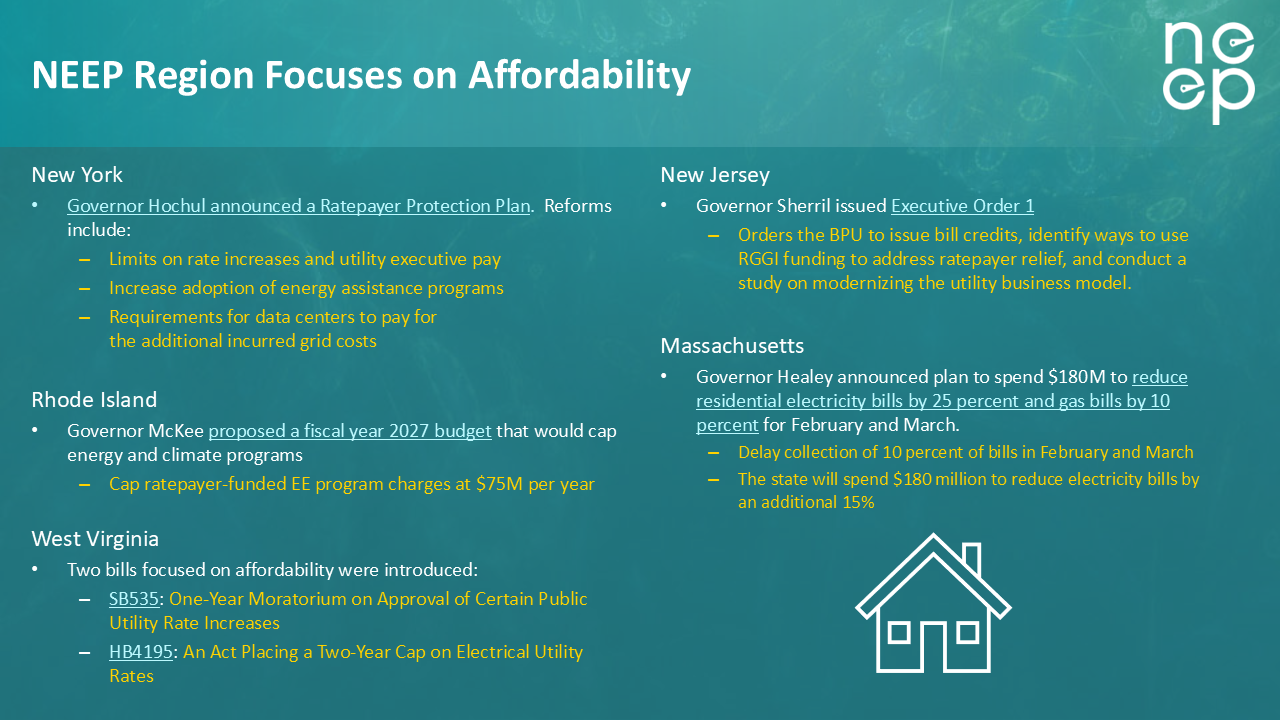
In New York, Governor Hochul announced the Ratepayer Protection Plan, which includes limits on rate increases and utility executive pay, expanded energy assistance programs, and new requirements for data centers to cover additional grid costs.
In Rhode Island, the governor’s proposed budget would cap ratepayer‑funded efficiency program charges and extend the renewable energy standard timeline — a signal of growing pressure to contain near‑term costs.
In West Virginia, lawmakers are considering a moratorium on certain rate increases and a cap on electric utility rates.
In New Jersey, Governor Sherrill’s first executive order directs the BPU to issue bill credits, explore the use of RGGI funds for ratepayer relief, and study modernization of the utility business model.
And in Massachusetts, Governor Healey has proposed a $180 million plan to reduce residential electricity bills by 25% and gas bills by 10% for February and March, combining delayed collections with direct bill reductions.
The throughline is clear: states want immediate, tangible tools to help households manage rising energy costs. And while these proposals vary widely, they all point to the same underlying need — a stronger, more visible set of affordability solutions.
At NEEP, we believe energy efficiency should be at the top of that list. One state energy official recently remarked, “We do not have a lot of tools for affordability.” NEEP’s goal is to help states see that they do — and that efficiency is one of the most powerful, immediate tools available. Alongside demand response and demand flexibility, efficiency can reduce bills, ease grid strain, and support long‑term resilience.
Building a Playbook for Affordability and Load Growth
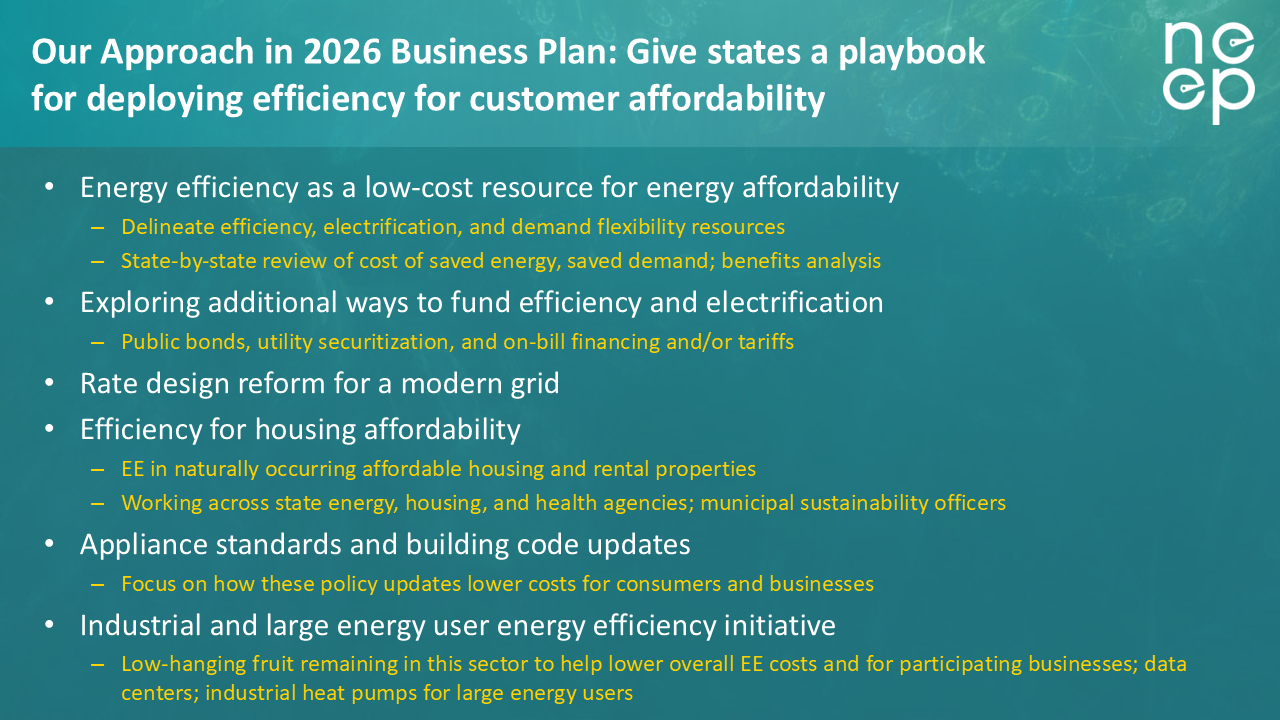
In NEEP’s 2026 business plan, we are developing a comprehensive playbook to help states deploy energy efficiency as a core affordability strategy — one that also supports managing large load growth. These issues are deeply intertwined, and states need solutions that address both.
One major project will examine efficiency as a low‑cost resource. We are going back to fundamentals: the demand side as a source of megawatts — and a low‑cost one at that. This work will break down the differences between efficiency, electrification, and demand flexibility, recognizing that each offers distinct value to consumers and grid planners. As part of this, NEEP will conduct a state‑by‑state review of the cost of saved energy.
We are also exploring new funding pathways for efficiency and electrification beyond traditional ratepayer and taxpayer programs. States facing affordability pressures need ways to stretch program dollars further, leverage additional capital, and layer funding sources to support critical investments.
NEEP’s rate design initiative continues as well. Following a major report released in December, we have another forthcoming report on rate design for heat pump customers. This work will remain central to NEEP’s affordability strategy in 2026.
Another priority is efficiency for housing affordability, particularly in naturally occurring affordable housing (NOAH) and rental properties — segments often underserved by traditional programs. Addressing this gap will require coordination across state energy, housing, and health agencies, as well as municipal partners.
We are also advancing work on appliance standards and building codes. DOE’s recent reorganization — including the creation of an Office of Innovation Affordability and Consumer Choice — underscores the growing national focus on affordability. At the same time, states are facing deregulatory pressures on codes and standards. NEEP’s focus this year is to clearly articulate the affordability benefits of codes and how they help bring projects to fruition.
Finally, we are expanding our work to advance efficiency for industrial and large energy users, including data centers and industrial heat pumps. There is significant low‑hanging fruit in this sector, and states need strategies that address both affordability and load growth for these large customers.
Final Thoughts
States are searching for tools to help households and businesses manage rising energy costs. NEEP’s work is focused on ensuring they don’t feel limited in their options. By building a clear, actionable playbook — grounded in efficiency, demand‑side solutions, smart rate design, and cross‑sector collaboration — we can help states turn affordability challenges into opportunities for long‑term resilience and cleaner energy outcomes.
Interested in joining the NEEP Allies Network? Learn more about our members.