
By Michael Anderson | Wed, April 1, 26
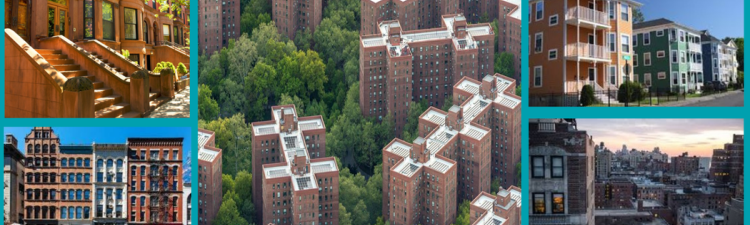
As states in the Northeast and MidAtlantic work to improve affordability for residential customers, energy efficiency in multifamily buildings has become an area of focus for practitioners and policymakers. However, the multifamily sector is diverse, complex, and dynamic, varying widely in building typology, ownership structure, retrofit financing strategies, and project design and implementation approaches. To address this fast-moving yet fragmented landscape, NEEP launched the Multifamily Retrofit Case Study Database, the first central repository of its kind. This collection of Northeast and Mid-Atlantic case studies includes more than 50 case studies representing over 9,000 housing units and more than $660 million in capital investment.
What’s in the Database?
The case study database provides a freely accessible central database of case studies published within the last five years. These projects have generated best practices and lessons learned that could greatly benefit stakeholders as they plan and execute new multifamily retrofit projects. Case studies were gathered from the public databases of leading regional organizations including NYSERDA, New Ecology, the Connecticut Green Bank, the Montgomery County Green Bank, and many more.
For each project, the database documents key information such as the year it was published and the year the project was completed. To ensure technical relevance, only case studies published after 2019 are included in the database. Additional details include the project name or location, climate zone, summary, and a direct link to the case study.
A key caveat in interpreting these results is that, collectively, the projects analyzed are predominantly deep energy retrofits and therefore likely overrepresent high-performing buildings. Additionally, many case studies rely on projected rather than measured energy savings, which can obscure differences between modeled expectations and actual performance. As a result, the reported reductions tend to reflect what is achievable under comprehensive, best-case conditions—rather than what is typically realized in standard multifamily retrofit projects.
Finding Trends in the Portfolio of Projects
The case study database also serves as a valuable data analysis and visualization tool. By breaking out and categorizing data points such as the year the building was constructed, the number of stories and units, total square footage, tenant demographics, and project outcomes, the database reveals patterns across regional building stock.
When examined in aggregate, these projects provide answers to questions frequently asked by regional program administrators, building owners and developers, architects, and policymakers such as: What common measures does a building retrofit entail? Which types of buildings and programs deliver the biggest reductions in energy usage or savings for owners and residents? What are the most common funding strategies that move projects from concept to completion? What level of savings is realistic for specific program elements or technologies? What are the gaps and missed opportunities that program designers or policymakers need to address?
This diversity in use cases is valuable for multiple audiences. Portfolio owners and managers, co-op boards, and affordable housing developers can use the database to find comparable buildings by age, footprint, climate zone, and other factors to analyze the outcomes of projects at similar properties. Program administrators and policymakers can use the resource to better understand how program designs, incentives, and technical requirements are reflected in projects, as well as to identify gaps between program intention and actual outcomes. Researchers and advocates can use the dataset as compelling evidence supporting arguments for more cost-effective incentive packages, targeted program strategies, or support for specific market segments.
Patterns from the Initial Data Set
The database is in its initial phase of development, but several important patterns have already emerged:
Deep energy savings in multifamily buildings are both achievable & replicable.
Across the projects that report pre- and post-retrofit EUI, the median reduction is around 50%, with multiple projects in the 60-70% range. Because the EUI reduction data set is limited and primarily drawn from deep energy retrofits, it overrepresents high performing projects. Nonetheless, the consistency of deep reductions in energy usage in various kinds of multifamily buildings highlights what is achievable and replicable with the right program design and financing strategies.
Subsidized affordable housing is a focus area for innovative program design.
Projects with a commitment to serving LMI residents receive more incentives and tax credits and therefore undertake more comprehensive project scopes, delivering larger energy savings than comparable market-rate projects featured in the database.
Comprehensive rehabilitation projects show consistent cost & savings ranges.
For retrofits that address envelope upgrades and space and water heating, project budgets typically fall into the $100,000 - $150,000 per unit range and achieve 50-60% reductions in energy usage. The majority of this per unit cost goes to building envelope improvements. This provides compelling evidence for policymakers evaluating how much it will cost to retrofit existing building stock and what it will take to incentivize owners to participate in state and utility programs.
On-site solar can help mitigate increased electrical loads – but feasibility varies.
Several projects in the database mitigate increased electrical loads by incorporating on-site solar. However, other case studies demonstrate that feasibility for on-site solar is often constrained by limited roof space. For projects that intend to mitigate increased electrical loads through on-site power generation, this underscores the importance of prioritizing roof space early in the project design process or considering alternatives such as carport solar or participating in a community solar program.
What’s Next and Addressing Data Gaps
The case study database also underscores the need for more consistent data collection and identifies areas where further research is needed. Many projects report modeled post-retrofit data rather than measured post-retrofit performance, limiting the ability to assess gaps between program design and real-world outcomes. Adding actual data on project outcomes would provide a clearer picture of the most effective strategies for reducing energy consumption in multifamily buildings.
Few case studies feature data on resident disruptions, post-retrofit comfort, health, or housing stability outcomes. This is a major data gap considering that the value proposition for housing providers is deeply intertwined with resident satisfaction. This data scarcity also represents a lost opportunity to demonstrate the impacts of deep energy retrofits on public health and affordable housing preservation.
Long-term operating and maintenance costs are also underreported and measured inconsistently, making it difficult to assess technologies on a lifecycle basis. Future work could focus on building partnerships with owners and program administrators to obtain post-occupancy data, resident feedback, and ongoing operating and maintenance costs to strengthen the database’s insights.
As the multifamily retrofit market continues to evolve, NEEP envisions the case study database as a living resource to be updated and expanded. This initial version demonstrates the substantial existing body of practice in multifamily housing projects as well as the value of comprehensive and consistent documentation. Future project phases could focus on rounding out this data set and adding new case studies as they become available. By filling existing gaps and expanding available information, practitioners will gain access to clear, evidence-based examples to guide decisions that improve projects for both property owners and the residents they serve.
The Multifamily Retrofit Case Study Database can be viewed here. For a copy of this free resource, please contact NEEP’s Community Solutions team.