
By Maggie Molina | Thu, May 7, 26
Across the Northeast and Mid‑Atlantic, the energy landscape is changing in ways that demand collective attention: Rising energy costs are putting pressure on households and businesses; rapid load growth from data centers is testing planning assumptions; and climate impacts are compounding operational stress. Demand‑side resources, including energy efficiency, demand flexibility, and efficient electrification, are delivering critical value that help address these challenges by lowering bills and making the grid more resilient.
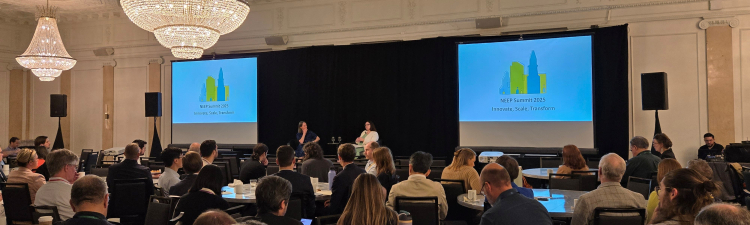
At NEEP, we convene a wide group of practitioners, policymakers, utilities, businesses, and community voices each year, because collaboration is what moves this region forward. In 2026, that work brings us to Baltimore. Summit is where collaboration turns to action: a place to share evidence, test tradeoffs, and align practical pathways that preserve affordability, strengthen reliability, and advance climate goals.
This year’s theme, The Power of Us, reflects the principle that can move our region from policy debate to implementation. The “us” is every partner, community, and leader ready to drive our region toward an affordable, clean, and resilient energy system. Through interactive sessions, hands‑on workshops, and informal conversations, Summit 2026 will explore tangible solutions that scale and unlock new approaches where gaps remain. Here, we provide a sneak peek at Summit 2026.
Affordability at a Turning Point – Perspectives from Regulators and Policymakers
Right now, affordability is the issue driving decision making in dockets, legislatures, and community meetings. Many jurisdictions are committed to energy efficiency, demand flexibility, and thoughtful rate design as the lowest‑cost ways to protect customers by helping them save money now and lowering long-term costs. Others are considering cuts to energy efficiency budgets and policies with a short-term focus on easing near‑term rate pressure.
We must be candid about the tradeoffs. Reducing investments in efficiency during a period of rapid load growth does not eliminate costs — it defers and concentrates them, making future solutions more expensive.
Regulators and policymakers will bring real‑time perspectives to help translate these tradeoffs into durable policy choices. Our conversations will focus on designing affordability strategies that leverage demand‑side resources, pair program design with targeted bill relief, and align rate structures with both customer and system value.
Keeping People at the Center of Program Design
Too often, communities and low‑ and moderate‑income households (LMI) face high barriers to participation in energy efficiency programs. This creates participation gaps that risk leaving the most vulnerable behind.
We will examine program designs that prioritize measurable bill impacts, reduce administrative friction, and remove barriers to participation. That includes addressing health and safety barriers to promote weatherization readiness, pairing weatherization with bill assistance, piloting income‑based rates where appropriate, investing in outreach and delivery models that meet people where they are, and setting performance metrics. Real affordability only happens when programs work for – and reach – LMI households.
Practitioners and community leaders will share what’s working on the ground and where policy adjustments are needed to scale equitable outcomes.
Scaling Proven Solutions and Bridging Funding Gaps
Scaling is the hard, unglamorous work that delivers long‑term savings. Building codes and appliance standards lock in efficiency for the life of buildings and products, reducing future program burdens. Yet code advancement has recently faced local resistance framed around upfront costs. At Summit, sessions will explore tools for adoption: clearer cost‑benefit timelines, local technical assistance, and communication strategies that translate long‑run savings into household and municipal benefits.
Financing is equally important. Ratepayer and taxpayer funds alone cannot meet the scale of needed upgrades. Financing programs, Energy‑as‑a‑Service, and blended public‑private capital can bridge gaps — but only if they are designed to complement traditional program funding and protect affordability.
At Summit, we will walk through real capital stacks and case studies — from multifamily developers who navigated funding gaps to lenders who structured deals that preserved affordability — so we can compare notes and replicate what works.
The Portfolio Shift Toward Integrated Demand‑Side Strategies
Some states are moving from siloed programs to integrated demand‑side portfolios. And with rising loads from data centers, the region holds significant potential to deploy demand-side resources for capacity needs. Energy efficiency, demand flexibility, rate design, and digital tools can operate as a cohesive strategy to manage demand, change load shapes, and lower system costs.
As approaches emerge, some are piloting “bring your own distributed capacity” models to harness behind‑the‑meter resources, including demand flexibility. We also see opportunities for AI and well‑structured data‑sharing agreements to reduce friction in program delivery. And many are evaluating thermal energy networks that offer system‑level advantages. These are not silver bullets, but together they form a kind of modern portfolio that help balance customer affordability with grid reliability.
Summit panels and deep dives will get into the weeds on where each tool fits, how to measure system value, and how to design portfolios that are resilient to changing conditions.
Where Policy Meets Practice
Policy debates must be translated into programs that are effective and easy to implement. That means confronting the operational realities of workforce capacity for weatherization and electrification, supply chain constraints for efficient equipment, and the administrative complexity of multi‑funder financing. It also means measuring success differently — prioritizing bill impacts, participation equity, and system value rather than siloed program metrics.
Practitioners will share replicable strategies from the field — how residential programs scaled participation, how multifamily projects closed funding gaps, and how code advocates earned county‑level progress despite local resistance. These are the conversations where policy becomes practice.
From Conversation to Commitments and Partnerships
This Summit is where we gather and dig in - together. The region’s challenges call for coordinated policy, aligned incentives, and practical implementation strategies that cross state lines and sector boundaries. That is The Power of Us.
What gives me confidence is this community itself — policymakers, program administrators, utilities, advocates, and community leaders who show up ready to share date and models, test assumptions, and learn from one another. Over three days, we will deepen our understanding, cultivate new collaborations, and build the relationships needed to move from insight to implementation. The three days will be full but rewarding — filled with the energy, people, and collaborative spirit that makes regional market transformation possible.
I hope you will join the conversation in Baltimore, June 2-4. NEEP looks forward to forging new partnerships that will help scale energy efficiency at this important time for regional energy affordability and grid resilience.