

By Erin Cosgrove | Wed, March 4, 26
As states across the Northeast look for ways to improve energy affordability, they should take a fresh look at the Regional Greenhouse Gas Initiative (RGGI), and its success in using energy efficiency to lower customer bills. RGGI is a longstanding regional cap-and-invest program that lowers carbon emissions while reducing bills for ratepayers. Through a cooperative effort among New England and Mid-Atlantic states, the program reduces climate-warming pollution, delivers meaningful economic benefits to customers, and leverages the power of regional cooperation. Since the programs start, RGGI states have generated over $15 billion in bill savings with a 4-to1 return on investment from proceeds directed toward energy efficiency programs. In 2024 and 2025, RGGI auction clearing prices increased to levels not seen before, resulting in some of the highest proceeds distributed to states since the program started.
In the past few months, several governors throughout the NEEP Region have highlighted the need to lower bills through direct rate relief. This includes proposals to tap higher levels of RGGI proceeds for short-term bill credits to households. This approach is not new; states have historically used a portion of RGGI funds for low-income and general direct bill assistance. According to the 2023 Investment Proceeds Report, 15% of funds supported direct bill relief in four states (Delaware, Rhode Island, Maryland, and New Hampshire) resulting in $128 million in bill savings. While 64% of funds in all states supported energy efficiency and provided $1.9 billion in bill savings. State policymakers have prioritized energy efficiency for a reason - these investments help customers lower their bills now and to continue saving year after year. Additionally, nine out of ten states participating in RGGI invested in energy efficiency programs to overcome barriers to access for low-income ratepayers. Moreover, energy efficiency investments not only benefit program participants but all ratepayers by lowering overall system costs and investing in a local workforce.

As policymakers weigh options for rate relief, this moment calls for long-term, meaningful investments. Rather than diverting funds toward small, one‑time credits, states can use RGGI to invest in lasting affordability by strengthening and targeting efficiency programs that deliver deeper, longer‑term savings for households who need it most. Here we unpack recent actions to divert RGGI funds, benefits that flow from energy efficiency investments, and strategies states can deploy to reach those with the highest energy burden.
States turn to short-term ratepayer relief as affordability pressures rise
Across New England and Mid-Atlantic, affordability has taken center stage prompting governors and legislators to propose or authorize one-time bill credits or provide temporary rate adjustments. These actions are designed to provide immediate relief, but they come with tradeoffs.
- Massachusetts: Governor Healey announced an initiative to immediately reduce electricity bills by 25 percent and gas bills by 10 percent. A portion of these reductions will be temporary with utilities deferring collection until the summer, effectively shifting costs for customers.
- Maryland: Governor Moore’s proposed budget would pull approximately $100 million from the state Strategic Energy Investment Fund (SEIF) to provide a one-time bill credit of $40 per household. SEIF is funded through RGGI proceeds and Renewable Energy Standards alternative compliance payments, meaning this relief directly diverts long-term clean energy and efficiency funding.
- New Jersey: Governor Sherill in Executive Order 1 ordered the New Jersey Board of Public Utilities (NJBPU) to issue bill credits by July 1. It also requires the NJPBPU, the Department of Environmental Protection, and Economic Development Authority to evaluate how RGGI funds could be used to support ratepayer relief for 2026 – 2028 program cycle.
- New York: Legislation has been proposed to use unspent funds from the Climate Investment Account to provide a one time bill credit for ratepayers. The Climate Investment Account is funded by New Yorks’s Cap and Invest Program and provides funds to support the state's broader energy transition.
These actions reflect real pressure on households, but they also would divert funds away from investments that generate deeper, longer lasting savings. When RGGI dollars are used for temporary bill credits, states lose the opportunity to expand energy efficiency programs that reduce bills for households with high energy burdens, lower system costs, and deliver ongoing benefits to all ratepayers.
Energy Efficiency is the success story of how the RGGI program can lower bills
States have consistently prioritized energy efficiency investments with RGGI proceeds (54 percent of all proceeds) with bill assistance programs coming in second (15 percent of all proceeds). When invested in energy efficiency programs, proceeds are used to increase current success stories and enable access to energy efficiency benefits for low- and moderate-income ratepayers. According to the 2023 Investment of RGGI Proceeds Report, nine out of ten states prioritized low- and moderate- income investments with their proceeds. Some examples that stand out in the region include Connecticut, Vermont, and Massachusetts. In Connecticut, RGGI proceeds were invested in the Home Energy Solutions Program, which provides audits and weatherization for households across the state and saved ratepayers $9.8 million in 2023. Vermont used its 2023 proceeds to provide low-to-no interest rate financing and income-based interest rate buydowns for homes that participated in the Home Performance with ENERGY STAR program and received weatherization and/or heating system upgrades. Finally, Massachusetts has used funding to fill in gaps for income-eligible multifamily deep energy retrofits that go beyond a typical retrofit project.
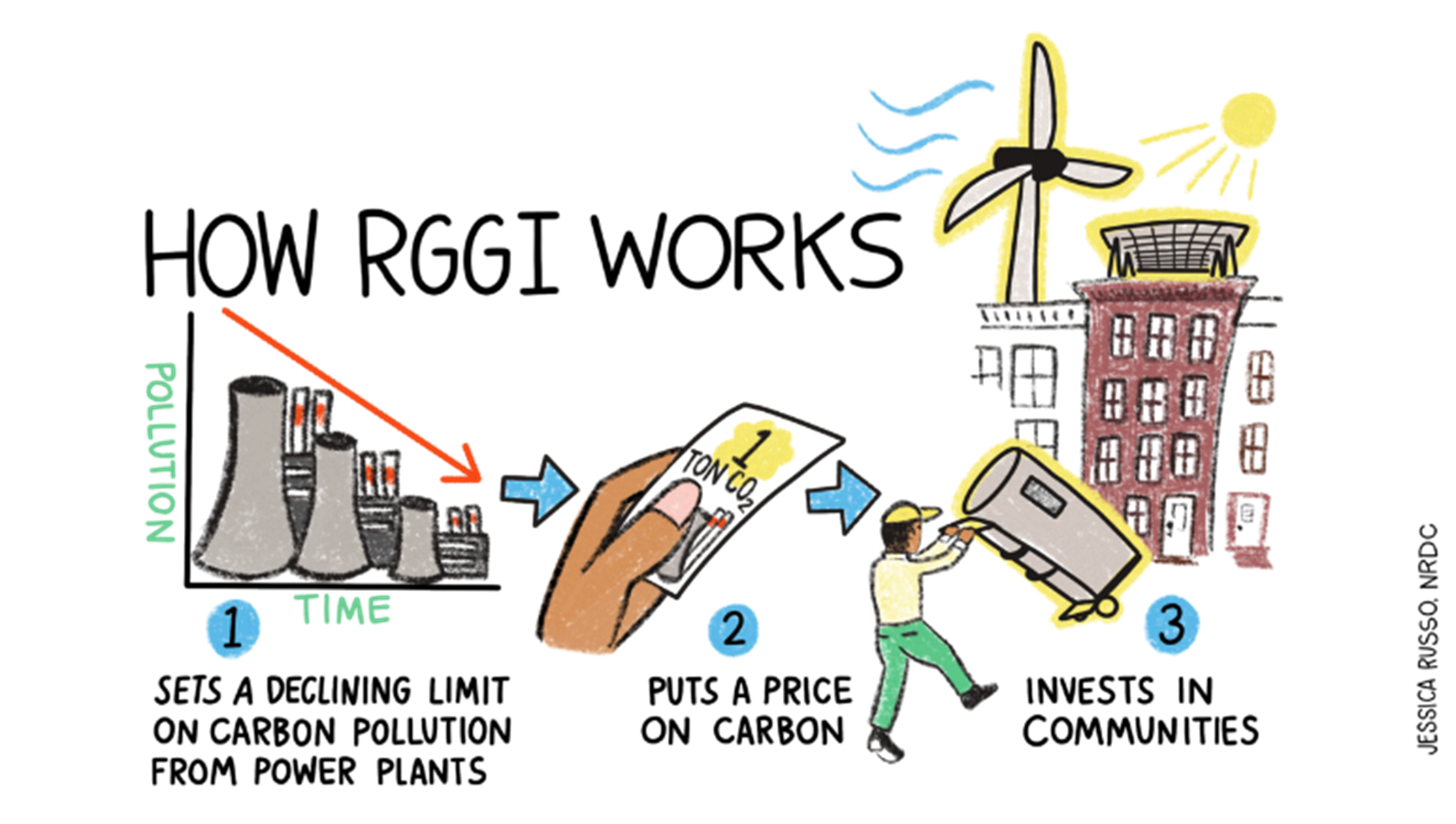
Image Source: RGGI's Record of Success, and What PA Stands to Gain
It is also important to highlight that energy efficiency programs do not just save ratepayer dollars but invest in the local economy as workers are needed to perform audits, install measures, and train building owners and managers. In 2023, RGGI investments created an additional 1,021 direct job-years. Additionally, a 2025 Energy Efficiency Jobs in America Report found that from 2023 – 2024, energy efficiency grew the fastest and added more jobs that any other energy sector at a rate of nearly 100,000 jobs a year. The energy efficiency workforce is comprised of small businesses with over 70% of companies having less than 20 workers. Additionally, these are good-paying jobs with the median wage for energy efficiency 20 percent higher than the US.
Now is the time to refocus RGGI proceeds on energy efficiency for households with high energy burdens
RGGI can be an important tool to combat energy burden and provide relief to households that need it the most. In 2023, investments in energy efficiency totaled $540 million and resulted in $1.9 billion in lifetime energy savings on bills. As state’s look to find ratepayer relieve, it is important to not miss out on the long-term rate relief these proceeds can provide. New York is already taking this message to heart with Governor Hochul announcing that over the next two years $230 million in RGGI proceeds will be directed to the Empower+, which serves low- and moderate-income households with access to weatherization and efficient electric appliances upgrades. In Virginia, legislation to have the state re-join RGGI passed the house due to its ability to lower electric bills in the long run with energy efficiency programs. urging the state to rejoin RGGI because of the benefits the program provides to ratepayers.
While direct bill relief results in immediate, temporary of lowering costs, the amount of relief can feel small (i.e. $40 on a $600 dollar energy bill). Energy efficiency investments create a higher payback by permanently reducing energy consumption, resulting in lower electrical bills, investing in homes, and growing the workforce at the local level. Now is the time to put individuals with the highest burdens first and deploy programs that serve homes that might not have access to existing efficiency efforts. In Delaware, RGGI funds are used to provide weatherization services for low-income individuals, including funding pre-weatherization barriers at no cost. Homes that receive weatherization repairs after being initially deferred can see an average annual savings of $372.
Instead of offering bill credits, states can prioritize households with high energy burdens and are unable to access current programs to ensure benefits flow to those that need it the most. These investments prioritize long-term, sustained savings that can lower bills immediately and in the future.
Conclusion
The finalization of the Third Program Review and announcement of changes to the Model Rule show there is a commitment to RGGI and the benefits proceeds provide and with proceeds growing, now is the time to identify long-term solutions for those who need it the most. Energy efficiency offers long-term savings and can improve the comfort of homes, lower bills, and increase the local workforce. Prioritizing affordability through investing RGGI funds in energy efficiency should be a priority for all as it is a good deal for ratepayers and local communities.